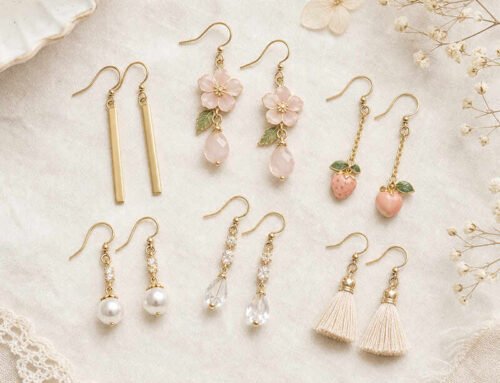
A garnet jewelry set brings several pieces together through a shared color, shape, or design. It might be a delicate pendant with matching stud earrings, a coordinated necklace and bracelet, or a more elaborate combination featuring earrings, a necklace, and a ring. The appeal is simple: you get pieces that work together, while still having the freedom to wear them separately.
Choosing the right set, however, takes more than finding a beautiful photograph. The shade of the stones, the metal, the dimensions, and the balance between individual pieces all affect how the jewelry looks and feels. A dramatic necklace may be perfect for an evening celebration but less useful if you mainly want something for work. A compact pendant and earrings might become everyday favorites, yet feel understated beside an elaborate formal outfit.A garnet jewelry set for ladies may look similar in photos, but the shade of the stones, the metal, and the dimensions all affect how it looks and feels in real life.
This guide focuses on those practical decisions. From comparing different set combinations to checking product descriptions and planning outfits, it will help you choose garnet jewelry that suits your wardrobe, your budget, and the way you actually live.
Start by Choosing the Right Garnet Jewelry Set Combination
Necklace and Earrings Sets
A necklace and earrings set is a useful starting point because it coordinates the pieces closest to your face without requiring a ring size or a bracelet measurement. It also gives you three straightforward wearing options: the necklace alone, the earrings alone, or both together. A garnet necklace paired with matching studs is the most popular entry point.
For everyday outfits, consider a small pendant paired with studs or short drops. This combination can add color without overwhelming a shirt collar, knitted sweater, or simple dress. For evening wear, you might prefer a more noticeable pendant with longer earrings.
Before purchasing, check what the seller means by a “two-piece set.” A necklace and a pair of earrings may be described as two items, even though there are three separate physical objects. Read the included-items list rather than relying on the number in the title.
Necklace, Earrings, and Ring Sets
Adding a ring creates a coordinated detail away from the neckline. This can make a set feel more complete, especially when the ring repeats a distinctive stone shape or decorative setting.
The practical question is whether you will wear all three pieces regularly. If you already wear an engagement ring, wedding band, or favorite everyday ring, think about where the garnet ring would fit. A large design may look beautiful in isolation but feel crowded beside jewelry you never remove.
Sizing also becomes important. Ask whether the ring is available in your exact size, whether resizing is possible, and whether resizing affects the return policy. An adjustable ring still needs a stated adjustment range; “adjustable” should not be treated as a promise that it will fit everyone.
Sets That Include a Bracelet
A bracelet can be especially appealing when your outfit leaves the wrists visible. It offers another place to repeat the garnet color without adding more detail around your face.
Check both length and fastening style. A bracelet should allow comfortable movement, but excessive looseness may let a decorative section rotate underneath your wrist. Consider whether you can operate the clasp independently, especially if you plan to wear it often.
A necklace, earrings, and bracelet combination may suit someone who does not enjoy rings. It can also be useful when buying a gift because you avoid choosing a ring size. Nevertheless, bracelet sizing still matters, and the recipient’s wrist measurement is more reliable than a general label such as “standard.”
Understand the Garnet Color You Are Buying
Garnet Is More Than One Shade of Red
Many people imagine garnet as a dark, wine-red gemstone. That familiar appearance is only part of its range. Garnet is a group of related minerals, and its gemstones occur in many colors, including reds, oranges, greens, and purplish shades. A listing that simply says “garnet” therefore does not describe one universally consistent color.gia+1
For a coordinated set, start with the appearance you want rather than assuming every garnet will look alike. Do you prefer a deep burgundy effect, a brighter red, or a red with a noticeable purple character?
Use descriptive words as a starting point, not as proof of the exact shade. Different sellers may apply terms such as “wine,” “cherry,” and “raspberry” differently. Clear photographs and a useful written description matter more than an attractive color name.
Compare the Stones Across the Entire Set
When evaluating a garnet jewelry set, look beyond the largest central stone. Compare the pendant with both earrings, and compare those pieces with the ring or bracelet if included.
Ask whether the stones appear reasonably coordinated in color, brightness, and overall character. Perfect visual identity may not be necessary, but a noticeably dark pendant beside much lighter earrings could create an effect you did not expect.
Make sure the listing shows the pieces together in at least one photograph. Separate close-ups can be useful for detail, but they make direct comparison harder when each image uses different lighting or backgrounds. If the photographs leave you uncertain, ask the seller for a group image rather than trying to infer the answer.
Consider How the Color Fits Your Wardrobe
A practical way to choose your preferred garnet shade is to identify three outfits you already own. Think about the colors, necklines, and overall formality of those clothes.
For example, a deep red set could become a deliberate accent against a plain cream blouse. The same set might create a richer, more tonal look with a burgundy dress. Neither approach is automatically better; they simply produce different effects.
Avoid choosing exclusively for an imagined future occasion. If a particular shade appeals to you but does not work with anything you currently enjoy wearing, consider whether you are comfortable building outfits around it. Jewelry becomes more useful when it connects naturally with your existing preferences.
Choose the Metal With Appearance and Ownership in Mind
Sterling Silver Garnet Jewelry Sets
Sterling silver contains 92.5% silver and is commonly marked with terms such as “sterling” or “925.” The remaining portion consists of other metals. When comparing products, distinguish sterling silver from descriptions that only refer to a silver color or finish.
Visually, a silver-colored setting can create a crisp outline around red garnet. If your existing jewelry is mostly silver-colored, this may be an easy way to introduce a coordinated gemstone set without changing your overall accessories.
Read the material description for every component. The pendant, chain, earring posts, and earring backs should not be assumed to have identical compositions unless the seller says so. If metal sensitivity is a concern, request specific information instead of relying solely on a broad “hypoallergenic” claim.
Solid Gold Garnet Jewelry Sets
Gold jewelry descriptions should identify the gold content rather than simply mentioning a gold appearance. For example, 14-karat gold means 14 parts out of 24 are gold. The karat designation describes composition; it does not tell you everything about construction, comfort, or craftsmanship.
When considering a solid gold set, evaluate the whole object. Ask about the chain, clasp, earring fittings, and whether larger components are hollow or solidly constructed. A metal label cannot replace those practical details.
Choose the color of gold according to your taste and existing wardrobe. Yellow, white, and rose-colored settings create different visual relationships with garnet. Rather than following a rigid rule about which is best, compare similar designs and decide which combination you would enjoy wearing repeatedly.
Gold Vermeil and Gold-Plated Options
Gold vermeil and gold-plated jewelry should not be treated as interchangeable descriptions. Under United States guidance, vermeil has a sterling silver base and must meet requirements for its gold coating, including minimum fineness and thickness. Ordinary gold-plated jewelry can use a different underlying metal.consumer.ftc+1
For a plated garnet jewelry set, ask what lies beneath the coating, what the coating consists of, and what care the manufacturer recommends. Also ask whether refinishing or replating is available.
These details help you judge ownership beyond the initial purchase. A set intended for occasional dinners may suit your needs differently from one you expect to wear throughout the working week. Compare materials in the context of your intended use, not simply by ranking them from cheapest to most expensive.
Look Closely at Stone Shape, Size, and Overall Proportion
Choose a Shape That Fits the Mood You Want
Round, oval, pear, cushion, and rectangular outlines can give otherwise similar sets noticeably different personalities. You might prefer round stones for a straightforward, compact look, or pear-shaped drops for a more elongated silhouette.
These are styling choices rather than strict categories. An oval stone can appear modern in a plain setting or decorative in an elaborate frame. Likewise, a round garnet can be understated as a stud or dramatic when surrounded by an extensive design.
Look at the outline of the entire piece, not just the gemstone. A modest stone inside a wide ornamental border may occupy more visual space than a larger stone in a minimal setting. The full dimensions are therefore essential.
Read Millimeter Measurements Before Carat Weight
Carat weight describes gemstone weight, but it does not replace face-up dimensions. When choosing a set online, measurements in millimeters help you estimate the visible size of each stone and the overall jewelry.
Pay attention to what each measurement refers to. A pendant’s total length may include its bail, while the gemstone itself may be much smaller. Earring length may include a hook or decorative connector.
You can make a simple paper outline using the stated dimensions and hold it near the intended wearing position. It will not reproduce sparkle, depth, or weight, but it can reveal whether a pendant is much larger or smaller than you imagined. This is particularly useful when product photographs are tightly cropped.
Balance the Pieces Instead of Maximizing Every Detail
A coordinated set does not need a large necklace, long earrings, a wide bracelet, and an oversized ring simultaneously. Decide which piece should lead.
If you love a statement necklace, smaller earrings can allow it to remain the focus. If the earrings are the main attraction, a compact pendant may provide enough connection without competing. A decorative ring can add a separate focal point when the neckline remains simple.
This approach also makes the set more flexible. Pieces with different levels of visual emphasis can be combined for formal occasions and separated for everyday wear. Think of the set as a small collection of options, not a uniform that must always be worn in full.
Check Construction Before Falling in Love With the Design
Inspect How the Stones Are Held
Ask for clear photographs showing the setting from the front, side, and back. These views can help you understand how much of the stone is exposed, how high it sits, and whether the surrounding metal is likely to catch on clothing.
A raised setting may appeal to you visually while requiring more consideration during daily activities. A lower-profile design may be more comfortable if you dislike jewelry that projects noticeably from the body.
Photographs cannot establish every aspect of setting security. If you are buying in person, ask the jeweler to explain the construction. If buying online, check whether the seller offers inspection, repair, and support if a stone becomes loose. Clear aftercare information is more useful than vague assurances about premium quality.
Evaluate Chains, Clasps, and Earring Fittings
Small functional parts can determine whether you enjoy wearing a set. Check the chain length, the adjustment range, and the type of clasp. Consider whether the pendant can be removed from the chain if you later want a different length or style.
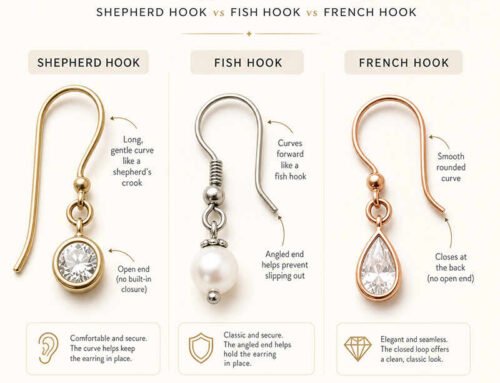
For earrings, identify the fastening before ordering. Studs, hooks, and hinged closures provide different wearing experiences. Ask about earring weight when a design is substantial, and clarify whether the stated weight is per earring or for the pair.
A bracelet clasp deserves the same attention. Attractive jewelry is less useful if fastening it feels frustrating every morning. Choose fittings that match your comfort, dexterity, and willingness to handle small components.
Look for Finishing Details That Affect Comfort
Inspect the back of each piece rather than concentrating entirely on the decorated front. Smooth finishing, sensible proportions, and well-positioned connections matter because these are the surfaces and parts you interact with.
For a ring, consider the width underneath the finger and how the setting sits beside adjacent fingers. For earrings, think about whether decorative edges might press against the skin. For a pendant, examine how it hangs from the chain.
If possible, try the jewelry while sitting, turning your head, and moving your arms. A set can feel comfortable during a brief mirror check yet become distracting during ordinary movement. Comfort is personal, so your own wearing experience should guide the final decision.
Compare Value Without Relying on Price Alone
Compare Like With Like
Two garnet sets may look similar in small photographs while differing substantially in materials, dimensions, and included pieces.
Create a short comparison list covering the metal, stone description, measurements, chain specifications, and return conditions. This prevents an attractive headline price from dominating your decision.
If one listing provides detailed specifications and another does not, ask questions before assuming they offer equivalent value. Missing information is not proof that an item is poor, but it does make comparison harder. A seller’s willingness to clarify details can help you decide whether you feel comfortable proceeding.
Pay for the Features You Will Actually Use
A larger set is not automatically a better purchase. If you rarely wear bracelets, paying extra for a matching bracelet may add little practical value. If you wear earrings daily, comfortable fittings may matter more than an elaborate necklace you will reserve for one occasion.
Write down your priorities before browsing: perhaps a particular metal, a modest pendant, secure earrings, and enough flexibility for both work and dinner.
Then separate necessities from preferences. This makes compromises more deliberate. You might accept simpler packaging to obtain the chain length you want, or choose fewer pieces to stay within budget without changing your preferred material. The right value is connected to use, not just quantity.
Include Ownership Costs in Your Budget
Think beyond the checkout total. Shipping, import charges, resizing, replacement fittings, and possible future refinishing may affect what you ultimately spend.
For an online order, confirm whether returns require international shipping and whether original delivery charges are refundable. If a ring needs resizing, obtain a quotation and check whether alterations make the purchase nonreturnable.
You do not need to predict every future expense. The goal is to identify likely costs before committing. A slightly more expensive set with the right fit and clear support may suit you better than a lower-priced option requiring immediate changes. Conversely, a straightforward, well-described set may meet your needs without additional services or elaborate presentation.
Style a Garnet Jewelry Set for Everyday Wear
Begin With One or Two Pieces
For everyday styling, start with the smallest useful combination. Try the earrings alone with a familiar outfit, then add the necklace if you want more color.
This gradual approach helps you understand the set’s visual weight. You may discover that the earrings work with almost everything, while the pendant feels best with particular necklines. That is not a failure of coordination; it means the pieces offer different possibilities.
Keep the rest of the outfit relatively uncomplicated while experimenting. Once you know how the garnet pieces behave with your usual clothes, introduce other accessories. You can then decide whether you prefer a polished matching effect or a looser arrangement featuring only one element from the set.
This gradual approach helps you understand how a women garnet jewelry set behaves with your usual clothes, piece by piece.
Coordinate the Necklace With Your Neckline
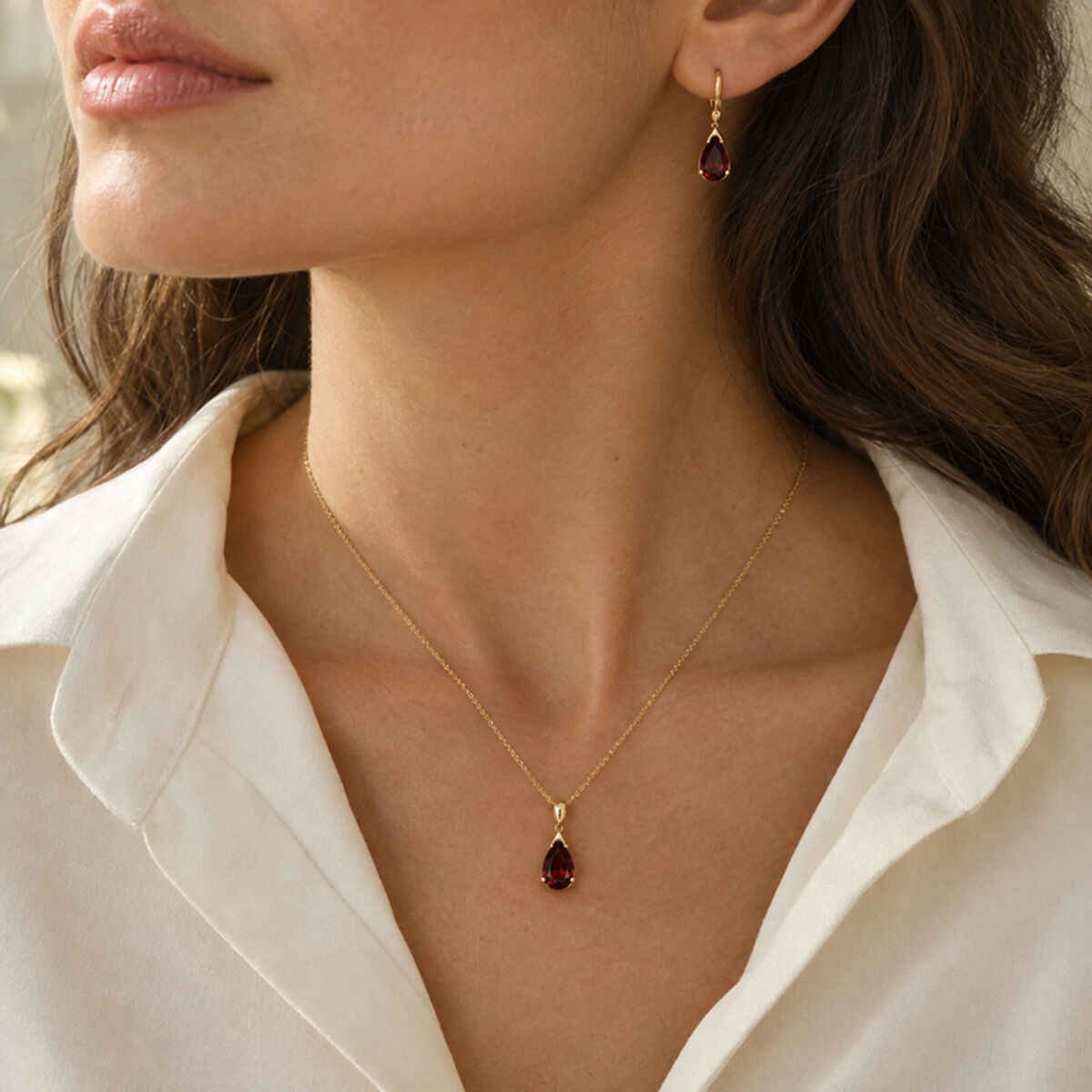
Use the neckline as a frame rather than assuming one necklace length works equally well with every garment. A pendant might sit within an open collar, above the edge of a scoop neckline, or over the fabric of a plain sweater.
The useful question is whether the pendant has enough visual space. If it repeatedly catches at the edge of the clothing or disappears behind fabric, adjust the length or choose a different piece.
Try the necklace with the actual outfit instead of judging each separately. Clothing thickness and neckline shape can change where the chain rests. An extender may offer flexibility, but check compatibility and appearance before treating it as a complete solution.
Let Existing Accessories Guide the Balance
Your watch, glasses, belt hardware, and everyday rings can influence how a garnet jewelry set feels within an outfit. You do not need every metal surface to match exactly, but repeated details can create a sense of intention.
If you prefer a restrained look, let the garnet provide the main color accent and keep other jewelry simple. If you enjoy mixing accessories, repeat one connecting feature, such as a metal tone or rounded shape.
The goal is not to satisfy a universal styling formula. It is to create a combination you feel comfortable wearing. Take a quick photograph of the complete outfit if you find it difficult to judge the balance in a mirror.
Wear Garnet Jewelry for Weddings and Special Occasions
Build Around the Outfit’s Main Detail
Formal clothing often includes decorative elements of its own: embroidery, beading, an unusual neckline, or a dramatic sleeve. Decide how the jewelry should relate to that detail.
With an ornate neckline, earrings and a ring may provide enough coordination without adding a necklace. With a simple strapless or open-neck dress, a necklace may become a more prominent part of the overall look.
Try more than one arrangement before the event. Wearing the full set may be exactly right, but leaving one piece off can sometimes create the balance you prefer. A matching collection gives you options; it does not require you to use every component at once.
Consider the Entire Event, Not Just the Photograph
An occasion outfit needs to work while you travel, greet people, sit down, eat, and possibly dance. Choose jewelry with those activities in mind.
Long earrings may interact with a high collar or hairstyle. A substantial bracelet may feel distracting at a table. A ring with a prominent setting may require care around delicate fabric.
Put on the complete outfit ahead of time and move normally for a few minutes. This can reveal small annoyances while you still have time to change the arrangement. Keep any unfamiliar fastening instructions and necessary accessories together so getting ready does not become a search for the correct backs, chain, or clasp.
Use Coordinated Sets Thoughtfully for Wedding Parties
If you are selecting garnet jewelry for several people, matching does not have to mean identical. You could choose the same stone color while allowing different earring styles or necklace lengths.
Ask about pierced ears, preferred metals, and comfort before ordering. A piece that suits one person may not suit another, particularly when earring weight or ring sizing is involved.
Clarify whether the seller can supply sufficiently coordinated pieces and whether the photographs represent the exact items or a general design. Order with enough time for inspection and any permitted exchanges. For gifts connected to a specific event, a practical delivery margin matters as much as attractive packaging.
Choose a Garnet Jewelry Set as a Meaningful Gift
January Birthdays and Second Anniversaries
Garnet is January’s birthstone and is also associated with the second wedding anniversary. Those connections can provide a thoughtful reason for choosing a set, particularly when the recipient already enjoys gemstone jewelry.
The symbolism should support the choice rather than replace knowledge of the person. Someone who prefers tiny studs may appreciate a modest pair and pendant more than an elaborate suite, even if both carry the same birthstone connection.
A short personal note can explain why you selected the jewelry. Mention the occasion, the color that reminded you of them, or the outfits you imagined it complementing. This makes the gift personal without relying on exaggerated claims about what a gemstone can do.
Choose the Recipient’s Style, Not Your Own
Observe the jewelry the recipient already wears. Do they choose delicate chains or substantial pendants? Are their earrings usually studs, hoops, or drops? Do they prefer coordinated pieces or a more mixed collection?
These clues can be more useful than broad descriptions such as “classic” or “fashionable.” The same observation applies to a men garnet jewelry set: simpler pendants, studs, or a bracelet may suit a recipient who prefers understated pieces. Also consider whether they wear rings regularly and whether they have mentioned metal sensitivities.
If you are unsure about sizing, a necklace and earrings set may involve fewer measurements than a set containing a ring. Nevertheless, confirm the earring style and chain length. A thoughtful gift balances surprise with practical compatibility, especially when the recipient will be the person wearing and caring for it.
Keep the Exchange Process Simple
A gift can be carefully chosen and still need an exchange. Select a seller with understandable terms and check whether the return window begins on purchase, dispatch, or delivery.
Holiday shopping and advance birthday purchases can create a timing problem if the recipient receives the jewelry after the normal return period. Ask about gift receipts and extended arrangements before ordering.
Preserve labels, documentation, and packaging until the recipient has checked the fit and condition. If you are considering engraving or customization, remember that these changes may affect return eligibility. Personalization is most useful when you are already confident about the design, measurements, and recipient’s preferences.
Shop Online With a Clear Inspection Plan
Read the Description as Carefully as the Photographs
A useful listing should identify what is included, the metal composition, the gemstone description, and the dimensions. For sets, check whether the chain and earring backs are included rather than assuming every pictured component comes with the order.
Also distinguish statements about the specific item from general descriptions of a collection. A photograph showing several coordinating pieces may not mean all of them are included in the displayed price.
If the material description is unclear, request clarification in writing. Consumer guidance emphasizes accurate representation of gemstone identity and jewelry composition, making precise descriptions important when comparing purchases. Attractive presentation should accompany clear information, not substitute for it.
Ask Specific Questions Before Ordering
Specific questions tend to produce more useful answers than asking whether a set is “good quality.” You might ask:
-
What are the gemstone and overall pendant dimensions?
-
What is the necklace length, including its adjustment range?
-
What metals are used in the earring posts and backs?
-
Is the pictured set the exact set being sold?
-
Can the ring be resized, and under what conditions?
-
What support is available if a clasp or setting needs attention?
Choose the questions that matter to your purchase rather than sending an unnecessarily long checklist. The purpose is to resolve uncertainty. If an answer remains vague on a feature you consider essential, pause before placing the order.
Inspect the Set Promptly After Delivery
When the jewelry arrives, compare it with the order confirmation while the return period is still open. Check that every promised piece is present and that the dimensions and fittings match the description.
Examine the set in ordinary indoor light and near indirect daylight. Look for obvious damage, bent posts, mismatched components, or clasps that do not operate as expected. Do not deliberately stress the settings to test them.
Try the pieces carefully under the seller’s return conditions. Keep packaging and avoid removing tags if doing so affects eligibility. Report any concerns promptly with clear photographs. A systematic inspection gives you a better chance of resolving problems before wearing the set to an important event.
Care for Your Garnet Jewelry Set Properly
Understand What Garnet Durability Means
Depending on the type, garnet has a Mohs hardness of approximately 6.5 to 7.5 and fair to good toughness. GIA advises protecting garnets from hard blows and rough wear. These characteristics support jewelry use, but they do not make every garnet piece suitable for every activity.
Consider the design as well as the gemstone. A ring is exposed to different contact than a pendant, and a delicate chain has different vulnerabilities from a substantial bracelet.
Remove the appropriate pieces before activities that could involve impacts, snagging, or abrasion. This is especially sensible for gardening, contact sports, lifting weights, and handling rough materials. Match your precautions to the whole piece rather than relying on a hardness number alone.
Clean According to the Whole Set’s Materials
GIA recommends warm, soapy water and gentle cleaning for garnet, and does not recommend steam cleaning. Ultrasonic cleaning requires more caution, including attention to fractures in the stones.
However, a garnet jewelry set may contain coatings, additional gems, adhesives, or other components with their own requirements. Follow the maker’s instructions for the complete piece rather than assuming a method suitable for garnet is suitable for everything around it.
For straightforward pieces whose instructions allow it, gentle washing with mild soap, careful rinsing, and thorough drying can be appropriate. Avoid aggressive scrubbing and improvised chemical mixtures. If the construction or condition is uncertain, ask a jeweler before cleaning.
Store the Pieces Separately but Keep Them Organized
A set is easier to use when its components stay together without rubbing against one another. A compartmented jewelry box or separate soft pouches within one larger container can help you maintain that balance.
Fasten chains before putting them away and arrange them so they are less likely to tangle. Give earrings a designated place, including their backs, and allow cleaned jewelry to dry fully before storage.
For travel, use individual compartments rather than dropping the entire set into one pocket. Keep a small inventory of what you packed, especially if the collection includes a ring and bracelet as well as a necklace and earrings. Organization protects both the pieces and your ability to find them.
Build a Garnet Jewelry Collection You Will Actually Wear
Begin With Your Most Useful Combination
You do not need to purchase the largest available set immediately. Starting with a necklace and earrings can help you discover which sizes, shapes, and proportions suit you.
Wear those pieces with different outfits and notice what you reach for most often. Perhaps you enjoy the earrings daily but want a longer chain for the pendant. Perhaps the necklace becomes an evening favorite while the studs feel ideal for work.
These observations provide a better foundation for later purchases than buying additional pieces simply because they match. A useful collection develops around real habits. If you eventually add a ring or bracelet, you will have clearer priorities for its scale, comfort, and appearance.
Coordinate Future Pieces Without Requiring Exact Copies
If you want to expand a garnet jewelry set later, ask whether matching designs are likely to remain available. Availability can change, so consider whether exact matching is essential to your plans.
Another approach is to coordinate through a few shared details: a similar red tone, the same metal color, and a compatible level of decoration. The new piece does not necessarily need an identical setting.
Before purchasing an addition, compare it with the pieces you own, ideally side by side. If that is impossible, use measurements and clear photographs rather than memory alone. The most satisfying addition is one that earns a place in your wardrobe, whether it matches precisely or complements the original set more loosely.
FAQ About Garnet Jewelry Sets
What Should a Garnet Jewelry Set Include?
There is no single required combination. A set may contain a necklace and earrings, or it may also include a ring, bracelet, or other coordinating piece. Always read the itemized description. Product photographs can show optional accessories, and sellers may count a pair of earrings as one item when describing the number of pieces.
Is a Garnet Jewelry Set Suitable for Everyday Wear?
It can be, provided the design suits your activities and you give it appropriate care. Garnet has fair to good toughness, but GIA recommends avoiding hard blows and rough wear. A compact pendant and comfortable studs may be easier to incorporate into ordinary routines than a raised ring or elaborate bracelet. Remove vulnerable pieces for activities that could damage them.
Does Every Garnet Jewelry Set Have Dark Red Stones?
No. Garnet belongs to a group of related minerals with a broad color range. Red varieties are familiar, but orange, green, and purplish colors also occur. If you want a particular appearance, check the actual listing and photographs rather than treating the word “garnet” as a precise color description.
Should I Choose Silver or Gold for My Set?
Choose according to your preferred appearance, budget, and material requirements. Start with the jewelry you already enjoy wearing and compare similar garnet designs in different metal colors. Then check composition carefully. Sterling silver, solid gold, gold vermeil, and other gold-plated products are distinct descriptions, not interchangeable names for the same construction.
Can I Wear Only Part of a Matching Set?
Yes. Wearing the earrings alone, pairing the pendant with existing rings, or saving the full combination for an event are all reasonable options. Treat the set as a coordinated collection rather than a requirement to wear every piece simultaneously. This flexibility can make it more useful across casual outfits, work clothing, and formal occasions.
How Can I Tell Whether the Size Will Suit Me?
Check the full dimensions of the jewelry and the separate gemstone measurements. Confirm chain length, earring drop, bracelet length, and ring size where applicable. A paper outline can help you estimate the visible scale of a pendant or earring. For the best comparison, measure a piece you already own and enjoy wearing rather than relying entirely on photographs.
Is a Garnet Jewelry Set a Good January Birthday Gift?
It can be a thoughtful choice because garnet is January’s birthstone. It is also associated with the second wedding anniversary. Still, the recipient’s preferences should guide the style, metal, and included pieces. A meaningful gemstone connection works best when the jewelry is something the person will genuinely enjoy wearing.
How Should I Clean a Garnet Jewelry Set?
Follow the manufacturer’s instructions for the complete jewelry. For garnet itself, GIA recommends warm, soapy water and gentle cleaning, while advising against steam cleaning. Additional stones, coatings, and construction details may require different precautions. If you do not know what the set contains or notice a loose setting, consult a jeweler before cleaning it.gia+1
What Matters Most When Comparing Two Sets?
Compare the included pieces, metal composition, gemstone description, dimensions, construction details, and return conditions. Then consider which set fits your actual wardrobe and wearing habits. The better choice is not necessarily the largest or most elaborate one. It is the set whose appearance, comfort, specifications, and practical limitations you understand before purchasing.
Do I Need to Spend More for a Set I Will Love?
Not necessarily. Begin with a clear budget and prioritize the features that matter to you, such as comfortable earrings, a useful chain length, or a specific metal. Avoid paying for extra pieces you do not expect to wear. A well-chosen, clearly described garnet jewelry set can be satisfying because it fits your life, not because it contains the greatest number of items.