Earrings sit directly in or against a piercing, which is essentially a small, permanent opening in the skin. That makes cleanliness a health issue, not just a cosmetic preference. When grime builds up, it is not just unsightly; it can trap bacteria and irritants right next to vulnerable tissue.
Sweat, skin oils, dead skin cells, hair products, and makeup all gradually accumulate on earring posts and backs. Over time, this mixture forms a waxy film where bacteria can thrive. That film is often what causes the unpleasant smell many people notice when removing earrings. If left alone, it can contribute to redness, tenderness, and even infection, especially in newly pierced or naturally sensitive ears.
Keeping earrings clean is therefore about three things at once: maintaining the jewelry’s shine, reducing unwanted odors, and protecting the health of the wearer’s ears. A good cleaning routine balances all three goals.
Understanding Different Earring Materials
Different materials respond very differently to water, chemicals, and friction. A method that is perfectly safe for solid gold might be far too harsh for pearls or costume jewelry. That’s why one “universal” cleaning trick can be risky.
-
Gold and platinum: These are generally durable fine metals. They can usually be cleaned with warm water, mild dish soap, and a soft brush or cloth. Harsh abrasives, however, can still scratch the surface or dull the finish if you scrub too hard.
-
Sterling silver: Silver tends to tarnish as well as collect grime. Gentle soap and water will remove everyday buildup, but tarnish is better addressed with specialized silver cleaners or baking-soda methods. Strong chemicals or excessive rubbing can strip finishes or damage set stones.
-
Gemstone and diamond settings: Hard stones like diamonds and sapphires usually tolerate soaking and soft brushing. Porous stones and delicate gems (pearls, opals, turquoise, emeralds, certain vintage stones) should not be soaked. They need gentle wiping only and should be kept away from strong chemicals.
-
Costume jewelry and plated pieces: Many fashion earrings are made with base metal and plated with gold or another finish. Aggressive cleaning can wear away the plating or loosen glue, especially in pieces with rhinestones or glued embellishments. These require mild, short contact with water and very gentle handling.
When in doubt, look for care instructions from the brand or ask a jeweler about the safest way to treat a particular piece. The goal is always the same: clean enough for hygiene, but gentle enough to protect the material.
How Often Should You Clean Earrings?
There is no single rule that works for everyone, because cleaning frequency depends on how often you wear the earrings and how your skin behaves. However, a few simple guidelines help:
-
Everyday studs or hoops worn all day, every day: Plan a thorough clean at least once a month, and ideally add quick wipe-downs after each wear to keep oils and residue under control.
-
Earrings worn a few times per week: A gentle clean every one to two months usually works, plus occasional spot cleaning if you notice visible buildup or odor.
-
Special occasion or statement pieces: Inspect and clean them before and after big events, focusing on the backs and areas that touch the skin.
If you have very sensitive skin or a history of irritated piercings, you may benefit from slightly more frequent cleaning with gentle products, and from choosing metals that are less likely to trigger reactions.
General Hygiene Rules Before Cleaning
Before you go anywhere near your earrings or piercings with water, brushes, or cloths, basic hygiene steps can make a big difference. These habits reduce the chance of introducing new germs while you clean.
Wash Your Hands Thoroughly
Always start by washing your hands with soap and warm water for at least 20 seconds. Make sure to clean between your fingers, under your nails, and up to your wrists. Dry your hands with a clean towel.
It may sound simple, but this step prevents you from transferring bacteria or dirt directly onto the earrings or into the piercing. Hands touch many surfaces throughout the day, so treating them as “dirty tools” by default is a helpful mindset.
Work on a Clean, Safe Surface
Choose a clean, well-lit workspace such as a bathroom countertop or table. Lay down a soft towel or cloth. This not only keeps the area hygienic, but also prevents earrings from rolling onto the floor or bouncing into the sink.
If you clean earrings near a sink, always plug the drain or place a fine mesh strainer over it. Many people have lost tiny studs or backs down the drain by accident. This simple precaution saves both frustration and money.
Basic At-Home Cleaning Method
How can I clean my earrings without jewelry cleaner? Most everyday metal earrings—solid gold, platinum, stainless steel, and many silver pieces—can be safely cleaned with a mild soap and water routine. This is the foundation of good earring hygiene.
What You Need
What can I use if I don’t have jewelry cleaner?
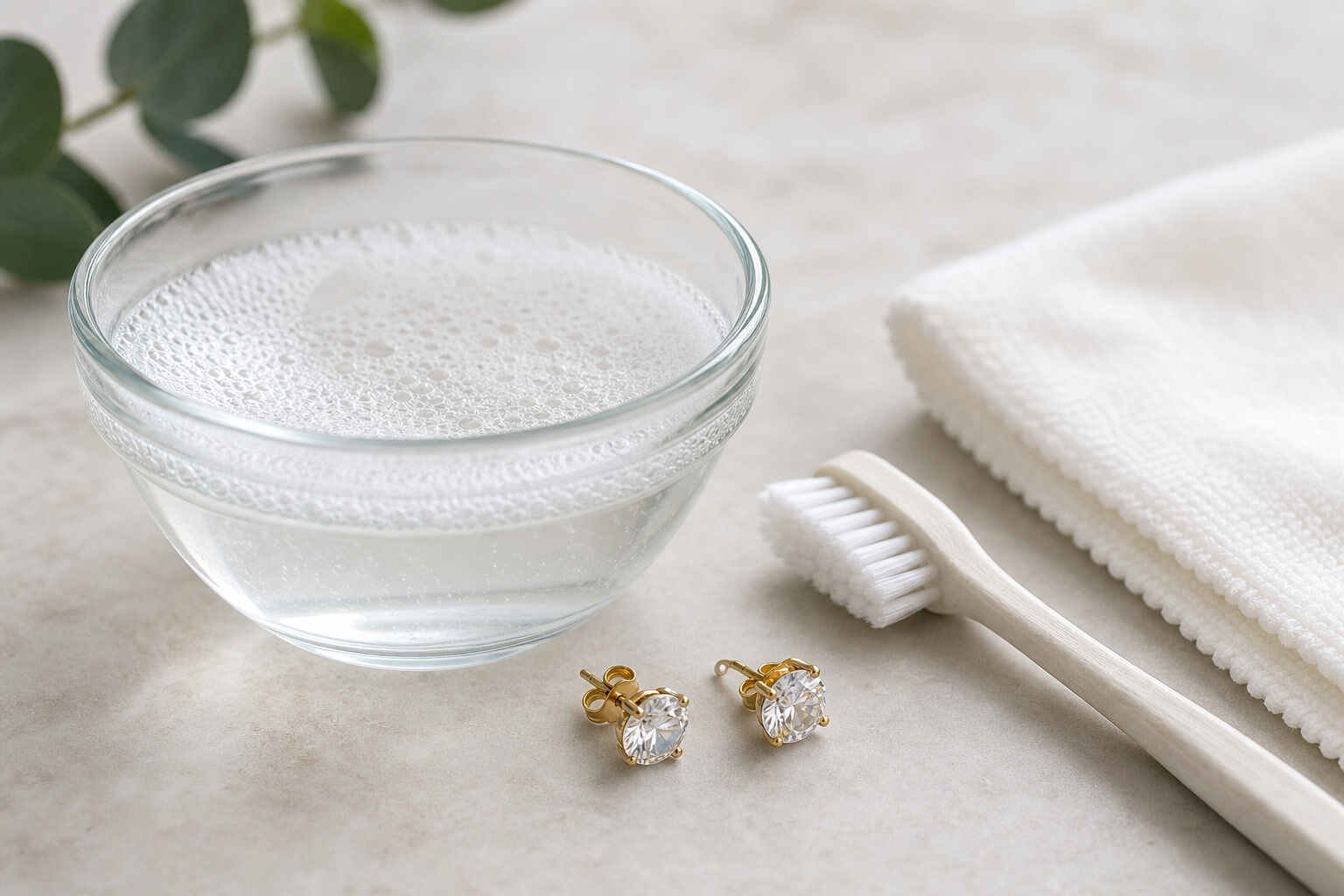
For a basic clean, gather the following items:
-
A small bowl
-
Warm (not hot) water
-
A few drops of gentle, fragrance-free dish soap or hand soap
-
A soft-bristled toothbrush or cotton swabs
-
A lint-free or microfiber cloth
Avoid strongly scented soaps, colored detergents, or heavy-duty household cleaners. These products can leave residue that irritates skin or damages delicate finishes.
Step-by-Step Cleaning
-
Fill the bowl with warm water and add a tiny amount of mild soap, stirring to create a gentle solution.
-
Place the earrings and backs into the solution. For most pieces, soak for about 5–20 minutes, depending on how dirty they are. This helps loosen oils and grime.
-
After soaking, use the soft toothbrush or cotton swab to gently scrub around posts, backs, and settings. Pay special attention to crevices and the area right behind decorative fronts, where buildup loves to hide.
-
Rinse each earring thoroughly under clean water, ensuring no soap film remains. Soap residue can attract more dirt later or irritate sensitive ears.
-
Lay the earrings on a clean towel or microfiber cloth and let them air dry completely. Only once they are fully dry should you put them back on or return them to storage.
This simple routine suits many sturdy metal earrings and can be repeated as often as needed. If you notice any loose stones or damaged parts during cleaning, stop and consult a jeweler.
Disinfecting Earrings Safely
How can I deep clean my earrings?A true deep clean combines soaking in warm soapy water, gentle scrubbing, thorough rinsing, and, for sturdy metal pieces, a short disinfection step with rubbing alcohol or hydrogen peroxide.Cleaning removes visible dirt and oils. Disinfecting goes a step further by reducing bacteria on the jewelry surface. This can be especially helpful for people who wear the same studs all the time or struggle with recurring irritation.
Using Rubbing Alcohol
Is it okay to soak earrings in rubbing alcohol?Rubbing alcohol (isopropyl alcohol) is a common disinfectant for metal earrings. It is not ideal for every material, but it can be very useful for simple studs and hoops without delicate stones.
To disinfect with rubbing alcohol:
-
Dip a cotton pad or cotton swab in rubbing alcohol.
-
Wipe the posts, backs, and metal surfaces thoroughly, paying close attention to crevices and textured details.
-
Allow the earrings to air dry fully on a clean surface. As the alcohol evaporates, it leaves the metal clean and disinfected.
For sturdy metal pieces, you can also gently place the metal parts into a small dish of rubbing alcohol for a short soak. Avoid immersing pearls, porous stones, or obvious glued components. Once you remove the earrings from the alcohol, pat them dry and let them air dry completely before wearing.
Cleaning with Hydrogen Peroxide
Hydrogen peroxide is another option for disinfecting and loosening stubborn buildup, but it should be treated with respect.
To use hydrogen peroxide safely:
-
Fill a small container halfway with hydrogen peroxide.
-
Place the earrings so that only the metal parts are submerged. If stones or decorations appear sensitive or glued, avoid soaking them directly.
-
Let the earrings soak for about 5–15 minutes. You may notice bubbles as the solution interacts with organic residue.
-
Remove the earrings, gently brush away any remaining debris with a soft toothbrush, and rinse with clean water.
-
Dry the earrings thoroughly on a clean paper towel or cloth.
Hydrogen peroxide is best reserved for robust metal earrings. It can damage certain stones, discolor some finishes, and loosen glues in costume pieces. If you’re unsure, test on a small, less visible area or ask a professional for advice.
Special Care for Silver Earrings
Silver earrings have their own set of challenges. They tend to tarnish, which is a chemical reaction on the surface, and at the same time can collect the same oils and residue as any other earring.
Baking Soda and Hot Water Method
How do I remove tarnish from my earrings?For sturdy sterling silver earrings without delicate stones or glued elements, a baking soda and hot water method can help lift tarnish and grime.
Here’s one approach:
-
Line a heat-resistant bowl with aluminum foil, shiny side up.
-
Place your silver earrings on the foil in a single layer.
-
Sprinkle baking soda generously over the earrings.
-
Carefully pour hot (not boiling) water into the bowl, enough to cover the earrings. The mixture will foam and fizz slightly.
-
Let the earrings sit in the solution for around 20–30 minutes.
-
Remove them and gently brush with a soft toothbrush, then rinse with cool water.
-
Dry thoroughly with a lint-free cloth so no moisture or residue remains.
This method can brighten the appearance of silver, but it is not suitable for all earrings. Avoid using it on pieces with fragile stones, enamel, or complex designs that might trap residue.
Polishing Cloths for Everyday Maintenance
Between deeper cleans, a soft jewelry polishing cloth is one of the safest ways to keep silver earrings bright.
After each wear:
-
Gently wipe the earrings with the cloth to remove fingerprints, oils, and light tarnish.
-
Use light pressure and short strokes. Over-polishing with strong friction can thin certain finishes over time, especially on plated pieces.
If the earrings are heavily tarnished or have special finishes, consider a silver-specific cleaner recommended by a jeweler rather than very aggressive home remedies.
Caring for Gold, Gold-Plated, and Demi-Fine Earrings
Gold and gold-plated earrings are staples in many jewelry collections. They need balanced care that preserves both hygiene and appearance.
Solid Gold and Fine Jewelry
Solid gold and platinum earrings are relatively robust. They respond well to gentle routines:
-
Clean them with warm, soapy water using a mild, fragrance-free soap.
-
Brush gently with a soft toothbrush around posts, backs, and settings.
-
Rinse thoroughly to remove all soap.
-
Dry with a lint-free cloth, then buff lightly to restore shine.
Abrasive paper towels or rough cloths can scratch even fine metal, so softer fabrics are always preferable. If the earrings are set with valuable stones, periodic professional cleaning may be worthwhile.
Gold-Plated and Fashion Jewelry
Gold-plated earrings have a thin layer of gold over base metal. They are more sensitive to over-cleaning than solid gold.
For these pieces:
-
Wipe them after each wear with a soft, dry cloth to remove oils and light residue.
-
If you need a deeper clean, lightly dampen a cloth with water and add a tiny drop of mild soap. Wipe the earrings gently, then follow with a clean damp cloth to remove any soap.
-
Avoid soaking plated earrings in water, alcohol, or peroxide, as prolonged exposure may cause the plating to break down.
-
Limit the number of polishing strokes so you don’t wear away the finish prematurely.
Treat fashion jewelry as decorative items that benefit more from prevention and gentle maintenance than from strong chemicals.
Pearl and Other Delicate Earrings
Pearls, opals, emeralds, and some vintage stones are particularly vulnerable. They can be scratched, dulled, or discolored by chemicals that are harmless to metals.
Gentle Wipe-Only Cleaning
For these delicate earrings, think “wiping” rather than “washing.”
-
Mix lukewarm water with a few drops of gentle, fragrance-free soap in a bowl.
-
Dip a soft cloth into the solution, then wring it out thoroughly so the cloth is damp rather than dripping.
-
Gently wipe each pearl or stone, avoiding vigorous rubbing or long contact with water. Focus on removing surface oils, not deep cleaning.
-
Use a separate dry cloth to pat the earrings dry, then leave them on a clean surface to air dry completely.
Do not immerse pearls or similar stones in water, alcohol, or peroxide. Avoid ultrasonic cleaners unless a jeweler explicitly confirms that a particular piece is safe for that method.
Everyday Prevention Habits
Prevention is often the best strategy for delicate earrings.
-
Put earrings on last, after makeup, hairspray, and perfume have already dried. This limits direct contact with potentially harmful products.
-
Remove earrings before swimming, showering, or engaging in intense exercise that causes heavy sweating. Chlorine, saltwater, and sweat can dull or stain delicate materials.
-
Store delicate earrings in a soft pouch or separate compartment so they do not rub against harder pieces.
By keeping delicate materials away from harsh conditions, you reduce how often they require cleaning and protect their long-term beauty.
Cleaning “Stinky” Stud Earrings and Backs
Why do my earrings get so gunky?Many people are surprised by the smell that can come from stud earrings and backs. This odor usually comes from trapped sweat, skin cells, and product residue. It does not mean you’re unhygienic; it simply shows how easily buildup collects in tight spaces.
Deep Clean for Studs and Butterfly Backs
What can I use to clean the gunk out of my earrings?
To tackle odor:
-
Place studs and backs together in warm, soapy water and soak for 5–10 minutes.
-
Use a soft toothbrush or cotton swab to scrub the post, butterfly back, and any small cavities. Don’t rush this step; odor often hides in tiny corners.
-
Rinse thoroughly to remove all soap and loosened debris.
-
Let the earrings and backs dry completely, ideally overnight on a clean towel.
If odor persists and the earrings are sturdy metal without delicate stones, you may add a short disinfecting step with rubbing alcohol or hydrogen peroxide, followed by another thorough dry. Freshly cleaned and dried earrings usually smell neutral or only faintly of metal.
Cleaning Earrings for Sensitive Ears
Sensitive ears may react to both the metal and the cleaning products used on earrings. A gentle routine can make everyday wear much more comfortable.
Choosing Suitable Cleaners
If your ears are easily irritated:
-
Opt for fragrance-free, dye-free soaps. These are less likely to leave problematic residue on jewelry.
-
Use warm water instead of very hot water, which can intensify reactions for some people.
-
Limit the use of alcohol and peroxide, or apply them only to the earrings and rinse well afterward so minimal residue contacts the skin.
You may also want to experiment with hypoallergenic metals like surgical stainless steel, titanium, or high-karat gold. If irritation continues even with clean earrings and gentle products, consult a piercer or healthcare provider for tailored advice.
When Earrings and Piercings Need Professional Help
Home care is useful, but there are limits. Certain signs mean it’s time to seek professional support.
Signs You Should See a Doctor
If you notice intense redness, swelling, throbbing pain, warmth, or discharge around a piercing, you may be dealing with an infection or significant irritation. Home cleaning alone is not always enough.
Do not try to “burn out” an infection with stronger chemicals. Instead, contact a healthcare professional promptly. They can advise whether you should remove the earrings, prescribe treatment, and suggest changes to your routine. Ignoring serious symptoms can lead to more complicated problems later.
When to Visit a Jeweler
Jewelry-related issues also sometimes need expert attention:
-
Loose stones, bent settings, or broken backs should be assessed by a jeweler.
-
Valuable earrings with intricate designs may be safer in professional hands than in home cleaning setups.
A jeweler can use specialized tools, ultrasonic machines, and brand-approved solutions that clean thoroughly without harming the piece. They can also give you specific guidance on everyday care for the metals and stones in your collection.
Storage and Daily Habits That Keep Earrings Clean
Cleaning is only half of the story. Smart daily habits can dramatically reduce how fast earrings get dirty and how often you need deep cleaning.
Smart Storage Practices
Store earrings in a clean, dry jewelry box, pouch, or organizer. Try these simple ideas:
-
Keep pairs separated, either in individual compartments or small bags, so they don’t scratch one another.
-
Avoid humid environments like bathrooms for long-term storage, especially for silver and certain stones.
-
Wipe earrings briefly before putting them away if you notice any residue from the day.
Labeling compartments by metal type or frequency of wear can help you keep track of which earrings need cleaning more often.
After-Wear Care Routine
An after-wear routine takes only a minute but saves you time later.
Each time you remove earrings:
-
Take them out before washing your face or using heavy creams, so skincare products do not smear onto posts and backs.
-
Wipe posts and backs gently with a soft cloth to remove sweat and oils.
-
Allow earrings to air dry on a clean surface before slipping them into storage.
This small habit prevents moisture from being trapped next to the metal and reduces the chances of odor or buildup forming between full cleans.
Frequently Asked Questions
Can I clean all earrings with rubbing alcohol?
Rubbing alcohol is suitable for many sturdy metal earrings, such as stainless steel, solid gold, and some silver pieces. It is less ideal for pearls, porous stones, or plated fashion jewelry, which can be dulled or damaged by repeated alcohol exposure. For those materials, stick to gentle soap and water or specialized cleaners.
Is hydrogen peroxide safe for my earrings?
Hydrogen peroxide can help loosen tough buildup and provide mild disinfection, but it is best reserved for robust metal earrings without delicate stones or glue. Always limit soak times, rinse well afterward, and avoid exposing pearls, opals, or glued rhinestones to peroxide. When in doubt, choose a gentler method.
How do I stop my earrings from smelling?
Odor usually comes from trapped sweat, dead skin, and product residue on the posts and backs. Regular deep cleaning with warm soapy water, careful scrubbing of tight crevices, and occasional disinfection for sturdy metal earrings are key. Let earrings and piercings dry fully after cleaning to prevent a damp environment where smells can develop.
Can I use household cleaners or bleach on earrings?
Strong household cleaners, bleach, and abrasive powders are not recommended for earrings. They can irritate skin, corrode metal, and damage stones and finishes. Stick to mild dish soap, specialized jewelry cleaners, rubbing alcohol, or peroxide used appropriately for specific materials.
How soon after piercing can I clean my new earrings?
Fresh piercings should follow the aftercare instructions given by your piercer or healthcare provider. This often involves saline solution and careful hygiene rather than standard jewelry cleaners. Do not remove or aggressively clean new earrings unless a professional advises you to do so, as this may interfere with healing.